


How to Potty Train a Toddler: 9 Real-Mom Strategies That Work
Every child learns at their own pace—but these simple, proven strategies can help parents guide toddlers through potty training with more patience and less stress

Subhead: Every child learns at their own pace—but these simple, proven strategies can help parents guide toddlers through potty training with more patience and less stress
Ah, potty training toddlers. Every parent’s least favorite part of raising children. It’s messy, it’s scary… and when you think about it, downright gross. But here’s the thing, once you’ve got it settled, it’s bye-bye diapers and wipes forever! Yup, you can say bye to a huge chunk of your grocery bill and say hello to the world of undies!
We spoke to some moms to get the intel on what worked best for them when they were potty training toddlers, and what didn’t…
Best tips for potty training toddlers from moms
Marga, mom of six
“Potty training toddlers can’t be rushed. You can’t do it when the kids are too young. The ideal age is around three — when they can understand what the goal is. Also, girls tend to learn faster than boys (I say this because they tend to be more uncomfortable when wet).”
Nikka, mom of two
“We made sure to always have a potty in the room they’re in, with provisions for privacy when we were potty training toddlers. For example, we put our potty behind the couch so our kids never felt like they were the center of attention.”
Marriane, mom of two
“Having a patient yaya really made a difference for us when we were potty training our toddler. When my son started potty training, he became obsessed with peeing, so he’d ask to go a million times a day.”
Valerie, mom of one
“We bought our toddler a book called Pirate Pete Potty. We also started potty training him with poop because it was easier to read his reactions to it. The moment he starts making that poop face, we’d rush to the potty ASAP! Also, finding a comfortable potty seat is key. They’re going to spend lots of time on it.”
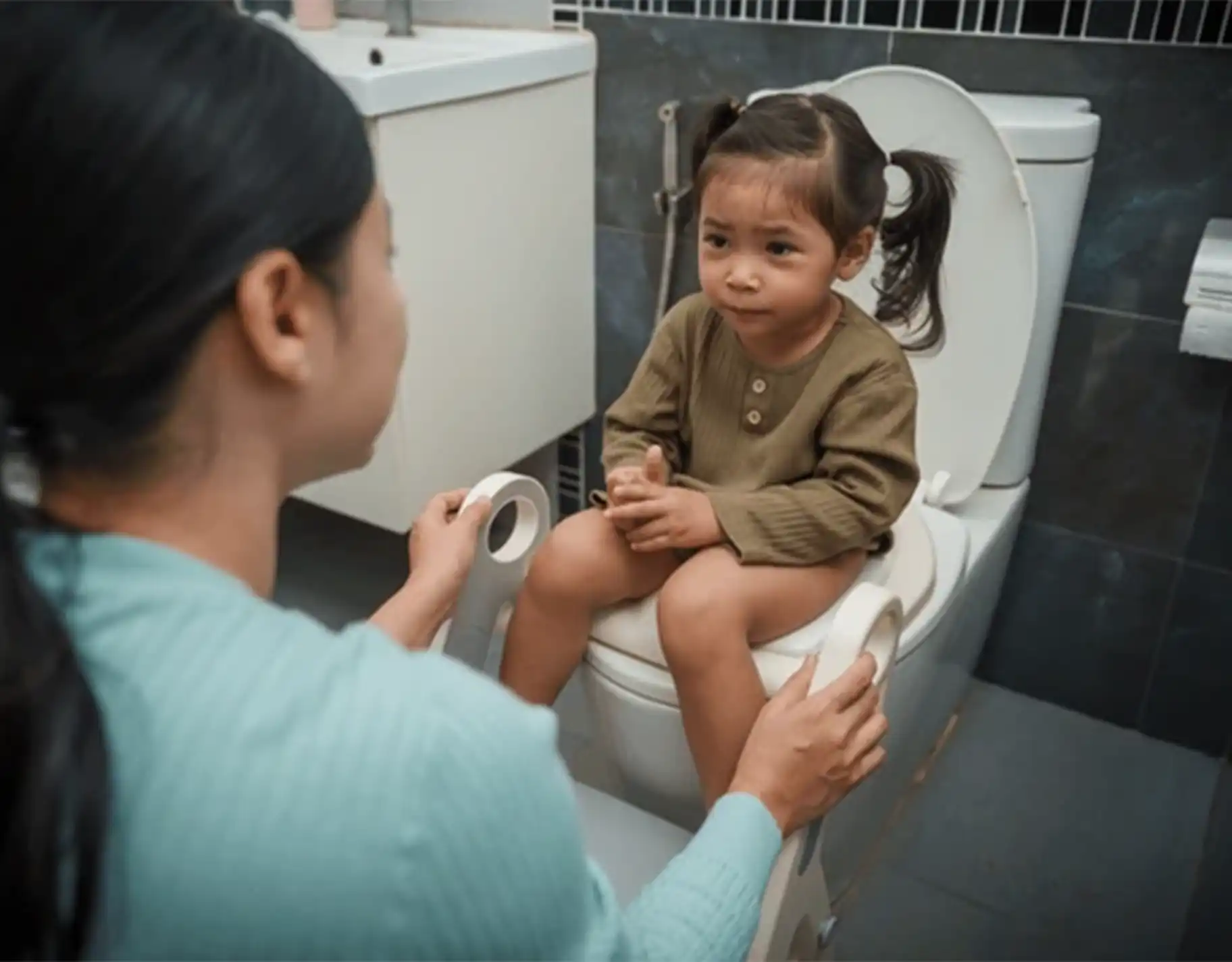
Corinna, mom of two
“We bought our daughter cool underwear — unicorns, rainbows, the works — so that she wouldn’t want to dirty them. Also, my younger daughter is starting to pick it up. She watches her sister and just copies her!”
Ala, mom of two
“Give your toddler the a choice between the potty and the toilet when you’re potty training them. For newbie potty training toddlers, the toilet might be too scary! Bribing also worked for us…”
Mabel, mom of one
“We got our son a potty that looked like an actual toilet. I got my husband to demo (haha) and we placed it beside a real toilet. I also found that letting them experience sleeping in a wet bed will really train your toddler to use the potty.”
May, mom of one
“I’d watch out for certain facial expressions when potty training my toddler. My daughter makes a face when she needs to do #2, it was my signal to sit her on that potty! Also, she loves being a “big girl” so we make it a big deal that when she goes to the potty, it’s just like what a big girl would do.”
Jenn, mom of two
“We did star stickers on the bathroom wall. Every time we were successful, we’d put up a sticker, which made the whole process a lot of fun. We also made sure to follow a regular schedule — right after waking up, before and after meals, you get the drill!
Potty training toddlers doesn’t have to be difficult. All it takes is a whole lotta patience, a mop and all the useful tips we’ve gathered above. You’ve got this, mama!
Frequently Asked Questions
The ideal age to begin potty training a toddler is generally around three years old, as children at this stage can better understand instructions and goals. However, readiness varies, and parents should look for physical indicators like discomfort when wet or a sudden awareness of their bodily functions. Waiting until the toddler is developmentally ready prevents frustration and speeds up the overall learning process.
Parents can identify a toddler’s readiness cues by watching for distinct facial expressions or behavioral changes when the child needs to use the bathroom. For instance, many toddlers make a specific “poop face” or pause their activity right before having a bowel movement. Recognizing these immediate physical signs allows caregivers to guide the child to the potty seat swiftly and reinforce the habit.
Effective motivators include positive reinforcement systems, such as tracking successful attempts with star stickers on a bathroom wall chart. Providing fun, kid-friendly underwear featuring favorite characters like unicorns or rainbows also discourages accidents, as toddlers actively avoid dirtying them. Additionally, offering simple rewards or framing the process as a milestone for being a “big kid” builds excitement and cooperation.
Giving your toddler a choice between a standalone potty chair and a standard toilet adapter helps reduce fear, as full-sized toilets can initially seem intimidating. Utilizing a mini potty that mimics an actual adult toilet, placed right next to the real one, makes the transition much easier. Demonstrating how to use it and ensuring the seat is highly comfortable will encourage the child to sit for longer periods.
Establishing a strict, predictable daily schedule is vital for building muscle memory and making bathroom visits a natural habit. Try taking your toddler to the restroom immediately after they wake up, as well as right before and after main meals. Combining this regular timing with plenty of patience helps minimize accidents and reduces the daily stress for both parents and children.
Related Stories

Simple tips, honest truths, and supportive advice to help you and your baby thrive